As someone who’s spent over a decade working with Android Poc Radio technology first as an engineer, then as a supplier, I can’t tell you how many times I’ve heard customers walk into our showroom (or message us on our inquiry form) frustrated because they picked the wrong device for their day-to-day work. A construction foreman who bought a slim, consumer-grade Poc Radio because it looked sleek found its battery died before lunch on a 10-hour job. A retail security team that opted for a ruggedized model with 30 channels wasted budget on features they never used, when they only needed group broadcast functionality. The truth is, choosing the right Android Poc Radio isn’t about grabbing the highest spec or the cheapest option—it’s about matching the device’s capabilities to your specific needs. This guide is built on the questions we ask every prospective client before they place an order, and the lessons we’ve learned from 10+ years of supporting teams in warehousing, hospitality, construction, and field services. android Poc Radio

First, let’s clarify what an Android Poc Radio actually is, because there’s a lot of confusion with consumer apps like WhatsApp or Zoom calls. Poc stands for “Push to Talk over Cellular” — meaning it uses your existing 4G/5G cellular network (no extra radios or repeaters needed, unlike traditional two-way radios) to send instant, push-to-talk communications. An Android Poc Radio is just a two-way radio built on the Android operating system, which lets it integrate with other business tools — like inventory management software, shift scheduling apps, or GPS tracking — that legacy two-way radios can’t touch. That flexibility is its biggest strength, but it also means you have to narrow down what functionality you actually use, because adding unneeded features drives up cost.
Let’s start with the most foundational question: How will you use this Poc Radio, and in what environment? This isn’t a one-size-fits-all tool. For example, a team of housekeeping staff at a 500-room hotel works in tight corridors, busy lobbies, and outdoor pool areas. Their needs are different from a 20-person excavation crew working on a remote highway, or a warehouse team moving pallets in a 100,000-square-foot facility with concrete walls that block cell signals.
Let’s break environment down first. If your team works primarily indoors, especially in spaces with thick walls or metal structures (like warehouses, manufacturing plants, or hospital basements), you’ll need a Poc Radio with strong cellular reception sensitivity. Some lower-end models cut corners on antenna design, so they struggle to maintain a stable connection in areas where regular cell phones drop calls. We once had a manufacturing client switch from a budget Poc Radio to our mid-tier model simply because their old device dropped 1 in 3 calls in their stamping shop, while the new one maintained a clear connection 98% of the time. If your team works outdoors, remote sites, or places with weak cell coverage, look for a device with dual SIM card slots or support for multiple cellular bands (especially Band 12 and Band 14, which are optimized for low-signal areas in the U.S. and many other regions). We also work with clients who use signal boosters paired with our rugged Poc Radios for remote job sites — that combination eliminates drop-offs entirely.
Next, core functionality: Do you need more than just basic push-to-talk? Basic Poc Radios let you send one-to-one or one-to-group voice calls, which works for small teams. But if you need to integrate with other business tools, that’s where Android’s advantage comes in. For example, if your warehouse team scans barcodes while talking to pickers, you’ll want a Poc Radio with a built-in barcode scanner — no need to carry a separate scanner and a phone. If you manage a field service team, GPS tracking is non-negotiable: you need to know your technicians are on site, not taking a detour to a coffee shop, and you need to send them job updates directly to their device. Some Android Poc Radios also support text messaging, photo sharing (for sending damage reports, for example), and even integration with ERP systems. The key here is to list exactly what you use daily, and prioritize devices that have those features — not the ones that have “all features.” A retail store security team might only need group push-to-talk and text alerts, so a device with those two features and a 2-day battery life will cost half as much as a model with barcode scanning, GPS, and video sharing that they’ll never touch.
Battery life is another make-or-break factor. We’ve seen clients choose a device with a 5000 mAh battery only to complain by the end of the first week that it dies at 3 PM. Why? Because if you’re using the Poc Radio for 8+ hours a day, with constant push-to-talk, background GPS, and app integrations, you need a larger battery — or a device optimized for low power usage. Our entry-level Poc Radio has a 4500 mAh battery that lasts 10 hours of active use, perfect for a hospitality team that uses it only for calls and quick texts. Our industrial-grade model has a 10,000 mAh hot-swappable battery, meaning you can swap in a fully charged battery in 10 seconds without turning the device off — critical for a construction crew that can’t afford downtime while waiting for a charge. We also advise clients to consider if they need fast charging: a device that charges 50% in 30 minutes is a lifesaver for teams that only charge their devices overnight, but don’t need to top up during a break.
Durability ties directly to environment, too. If your team is dropping devices on concrete, getting them wet with rain or cleaning supplies, or exposing them to dust from construction or manufacturing, you need an IP-rated device — IP67 or IP68, ideally. An IP67 rating means the device is dust-tight and can be submerged in 1 meter of water for 30 minutes, which is enough for most outdoor and warehouse use. IP68 means it can be submerged deeper, for longer, which is good for teams that work in heavy rain, snow, or even briefly drop devices in puddles. We also offer rugged cases for our Android Poc Radios, but honestly, we’ve found that most clients save money by just buying an IP-rated device upfront — they don’t need an extra case, and they avoid the risk of water or dust damage. For teams that work in offices or retail settings, an IP54 rating (splash and dust resistant) is often enough, and those devices are slimmer, lighter, and easier to carry around for long shifts.
One big mistake we see is ignoring network compatibility. Not all Android Poc Radios work on all cellular networks. For example, a device built for AT&T might have limited functionality on Verizon, especially in areas with mixed signal. If your team uses a specific carrier (or a private LTE network for a closed campus, like a factory or university), make sure the Poc Radio you choose supports that carrier’s bands. We have a lot of clients who run their own private LTE networks for their warehouses, and we offer custom-configured Poc Radios that work seamlessly with those networks — no extra setup needed. If you’re using a public cellular network, just check that the device supports your carrier’s 4G/5G bands, or talk to our team about which models work best with major carriers worldwide.
Budget is, of course, a factor, but it’s not just about the upfront cost. A $100 Poc Radio might seem cheap, but if it dies every afternoon, you’ll spend more in lost productivity over a year than you would on a $300 mid-tier device. We always advise clients to calculate total cost of ownership, not just sticker price. The cheap device might need to be replaced every 18 months, while a mid-tier rugged device lasts 5 years. Also, consider support: if your device breaks, do you have easy access to repair services? We offer on-site support for enterprise clients, and free software updates for all our devices for the first 3 years — something most budget manufacturers don’t offer. A Poc Radio that becomes outdated in 6 months because it doesn’t get software updates can’t run new business integrations, so that’s another hidden cost to factor in.
Let’s put this all together with real examples of clients we’ve worked with, to make it concrete. First, Maria, a operations manager at a 300-room downtown hotel. Her team has 15 housekeepers, 5 front desk staff, and 2 security guards. They work in tight spaces, no need for barcode scanning or advanced integrations, and their biggest pain point was budget — they wanted something under $200 per device. We recommended our entry-level Android Poc Radio: it has a 4500 mAh battery (12 hours of active use, enough for their 10-hour shifts), IP54 water resistance (perfect for cleaning spray and accidental spills), basic group and one-to-one push-to-talk, and works on their hotel’s carrier. They bought 20 units, and a month later, Maria sent us a message saying it cut down miscommunication between housekeeping and front desk by 70%. They didn’t need extra features, so the entry-level model was exactly right.
Another example: Jake, a construction foreman leading a 25-person crew building a highway overpass. They work 10 hours a day, outdoors, with weak cell coverage in the rural area, and devices are often dropped or exposed to rain and dust. They initially looked at budget consumer radios, but found they died after 4 hours in the sun and dropped calls constantly. We recommended our industrial rugged Android Poc Radio: it has IP68 water and dust resistance, dual SIM slots (so they can switch carriers if one has weak signal), a 10,000 mAh hot-swappable battery (they keep 2 spare batteries per device), and GPS tracking for their foremen to make sure crews are where they’re supposed to be. Jake said the total cost was a bit higher upfront, but they haven’t lost a single workday to dead radios or dropped calls, and the devices have lasted 18 months so far with no repairs. That’s the total cost of ownership working in their favor.
Now, what about common pitfalls to avoid? First, don’t buy a Poc Radio just because it’s “Android” — not all Android Poc Radios are the same. Some use a basic Android OS stripped down for push-to-talk, so they can’t run the business apps you need. Others come with bloatware that drains the battery or interferes with call quality. Second, don’t overspec. If you don’t need barcode scanning or video sharing, you’re wasting money on features you’ll never use. Third, test before you buy. Most suppliers (including us) offer free trials for 1-2 weeks, so you can see how the device works in your actual environment. We let clients take a test unit out on a job site or around their hotel, and 9 times out of 10, they pick the right device after testing instead of just reading specs online.
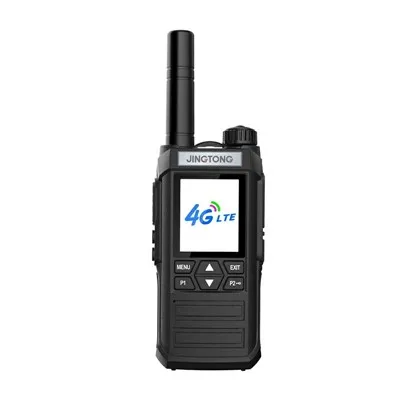
Finally, remember that your needs can change. If you’re a small team that starts with basic push-to-talk and later adds GPS for tracking, you want a Poc Radio that’s upgradable with software — not a budget model that will become obsolete in a year. We offer flexible software updates, so you can add features like GPS tracking or barcode scanning to your existing device as your team grows, without buying a whole new radio.
Marine Radio Choosing the right Android Poc Radio doesn’t have to feel overwhelming. It all boils down to three simple questions: What environment will you use it in? What core features do you need daily? What’s your total cost of ownership, not just upfront price? If you’re still unsure, we’re here to help. Our team works with businesses of all sizes, from small retail stores to large construction and warehouse operations, to match them with the right device for their needs. We don’t push the most expensive model — we push the one that will save you time, reduce miscommunication, and fit your budget. Reach out to us to discuss your specific use case, and we’ll walk you through our options, answer any questions, and even arrange a test if you want to see the device in action.
References
- Federal Communications Commission. (2022). "Push-to-Talk Over Cellular (PoC) Services: Technical Standards and Best Practices".
- Industrial Communication Technology Association. (2023). "Rugged Mobile Device Durability Standards for Outdoor and Industrial Work Environments".
- Android Open Source Project. (2022). "Optimizing Android Devices for Push-to-Talk Applications: Power and Performance Guidelines".
- National Retail Federation. (2021). "Workforce Communication Tools: ROI of Two-Way Radio Solutions for Retail Operations".
- Construction Industry Institute. (2020). "Mobile Communication Technologies for Job Site Productivity and Safety".
Jingtong (Quanzhou) Electronics Co., Ltd.
We are one of the most professional android poc radio manufacturers and suppliers in China, specialized in providing high quality customized service. We warmly welcome you to buy durable android poc radio made in China here from our factory. For price consultation, contact us.
Address: No.288, Si Huang Industry Zone, Xia Mei Town, Nan An, Quanzhou, Fujian province, China 362302
E-mail: jtdjj@jtdjj.com
WebSite: https://www.jteradio.com/
