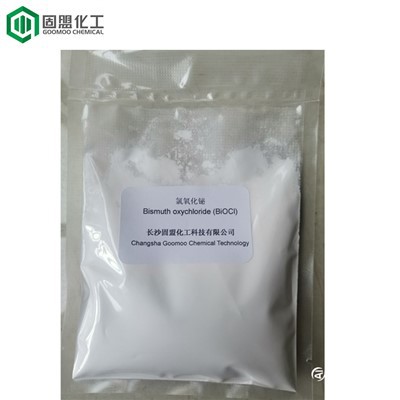
As a supplier of Bismuth Subnitrate, I’ve had numerous conversations with clients about the product’s quality and composition. One question that frequently comes up is about the common impurities in Bismuth Subnitrate. In this blog post, I’ll share insights based on my experience in the industry and scientific knowledge to shed light on this topic. Bismuth Subnitrate
Understanding Bismuth Subnitrate
Before delving into the impurities, it’s essential to understand what Bismuth Subnitrate is. Bismuth Subnitrate is a compound with the chemical formula Bi₅O(OH)₉(NO₃)₄. It is a white powder that is insoluble in water but soluble in nitric acid. This compound is widely used in various industries, including pharmaceuticals, cosmetics, and pigments. In the pharmaceutical field, it is used as an antacid and in the treatment of some gastrointestinal disorders. In cosmetics, it can be found in products like face powders to impart a smooth texture and a slightly pearlescent effect.
Sources of Impurities
The impurities in Bismuth Subnitrate can originate from several sources. Firstly, the raw materials used in its production can introduce contaminants. Bismuth metal, which is often the starting material, may contain trace amounts of other metals such as lead, copper, iron, and silver. These metals can carry over into the final Bismuth Subnitrate product if not properly removed during the manufacturing process.
Secondly, the manufacturing process itself can contribute to impurities. Chemical reactions may not proceed entirely as expected, leading to the formation of by – products. For example, incomplete precipitation or improper control of reaction conditions can result in the presence of unreacted starting materials or intermediate compounds in the final product.
Common Types of Impurities
1. Heavy Metals
- Lead (Pb): Lead is one of the most concerning impurities in Bismuth Subnitrate, especially when it is used in pharmaceuticals or cosmetics. Lead is a toxic metal that can have severe health effects, particularly on the nervous system, especially in children. It can accumulate in the body over time and cause cognitive and behavioral problems. In the production of Bismuth Subnitrate, lead can be present in the bismuth ore or introduced through the reagents used in the manufacturing process.
- Copper (Cu): Copper is another heavy metal that may be present as an impurity. Although copper is an essential trace element for the human body, excess amounts can be harmful, especially to the liver and kidneys. In Bismuth Subnitrate, copper can come from the bismuth source or from the equipment used during production, as copper is a common material in some industrial machinery.
- Iron (Fe): Iron is a relatively common impurity in many chemical compounds, including Bismuth Subnitrate. It can cause discoloration of the product, which is a significant issue, especially in cosmetics where a pure white appearance is often desired. Iron can be introduced from the raw materials, the manufacturing environment, or the equipment used in the production process.
2. Other Metals
- Silver (Ag): Silver is sometimes present as an impurity in Bismuth Subnitrate. While silver has some antibacterial properties, its presence in Bismuth Subnitrate may not be desirable, as it can affect the chemical and physical properties of the compound. Silver can come from the bismuth ore, as it is sometimes found in association with bismuth in nature.
- Arsenic (As): Arsenic is a highly toxic metalloid. Even in trace amounts, it can pose a significant health risk. The presence of arsenic in Bismuth Subnitrate can be traced back to the bismuth ore, as arsenic is a common impurity in many metal ores.
3. Non – Metal Impurities
- Chloride (Cl⁻): Chloride ions can be present in Bismuth Subnitrate. They can be introduced through the reagents used in the production process or from the water used in washing and purification steps. High levels of chloride can affect the solubility and stability of Bismuth Subnitrate and may also cause corrosion in some applications.
- Sulfate (SO₄²⁻): Sulfate ions are another possible non – metal impurity. Similar to chloride ions, they can come from the raw materials or the manufacturing process. Sulfate impurities can affect the quality and performance of Bismuth Subnitrate, especially in applications where its chemical properties are crucial.
Impact of Impurities on Product Quality and Applications
The presence of impurities in Bismuth Subnitrate can have a significant impact on its quality and performance in various applications.
Pharmaceutical Applications
In the pharmaceutical industry, the purity of Bismuth Subnitrate is of utmost importance. The presence of heavy metals like lead and arsenic can make the product unsafe for human consumption. Even low levels of these impurities can pose long – term health risks, especially for patients who rely on Bismuth Subnitrate – based medications for the treatment of gastrointestinal disorders. Regulatory authorities have strict limits on the allowable levels of impurities in pharmaceutical products. If a Bismuth Subnitrate product fails to meet these standards, it cannot be used in the production of medications.
Cosmetic Applications
In cosmetics, impurities can affect the appearance, texture, and stability of the final product. For example, iron impurities can cause discoloration, making the product less appealing to consumers. Chloride and sulfate impurities can affect the solubility and shelf – life of cosmetic formulations containing Bismuth Subnitrate. Cosmetic manufacturers require high – purity Bismuth Subnitrate to ensure the quality and safety of their products.
Pigment Applications
In the pigment industry, impurities can alter the color and tinting strength of Bismuth Subnitrate – based pigments. Heavy metals and other impurities can cause unwanted color shifts, reducing the quality and consistency of the pigments. This can lead to problems in matching colors and achieving the desired aesthetic effects in paints, coatings, and other pigment – based products.
Quality Control and Purification Processes
As a supplier of Bismuth Subnitrate, we are well – aware of the importance of controlling impurities. We have implemented a comprehensive quality control system to ensure that our products meet the highest standards of purity.
Raw Material Selection
We carefully select our raw materials to minimize the introduction of impurities. We source bismuth metal from reliable suppliers who have a proven track record of providing high – purity materials. Before using any raw material in production, we conduct thorough testing to determine its impurity levels.
Manufacturing Process Optimization
Our manufacturing process is designed to minimize the formation of impurities. We use advanced chemical engineering techniques to control the reaction conditions precisely, ensuring that the chemical reactions proceed as expected. We also have multiple purification steps in our process, including filtration, precipitation, and washing, to remove any impurities that may be present.
Analytical Testing
We perform extensive analytical testing on our Bismuth Subnitrate products. We use techniques such as atomic absorption spectroscopy (AAS) and inductively coupled plasma – mass spectrometry (ICP – MS) to analyze the levels of heavy metals and other impurities. These techniques are highly sensitive and can detect impurities at very low levels. Only products that meet our strict quality standards are released for sale.
Why Choose Our Bismuth Subnitrate
Our Bismuth Subnitrate stands out in the market due to its high purity. We understand that the presence of impurities can have a detrimental effect on the performance of your products, whether you are in the pharmaceutical, cosmetic, or pigment industry. By choosing our Bismuth Subnitrate, you can be confident that you are getting a product that meets the highest quality standards.

We are committed to providing excellent customer service. Our team of experts is always available to answer your questions about our products, including the impurity levels and how they may affect your specific applications. We can also provide customized solutions based on your unique requirements.
Bismuth Subnitrate If you are in the market for high – quality Bismuth Subnitrate, we invite you to contact us to discuss your procurement needs. We are eager to work with you and help you find the best Bismuth Subnitrate solution for your business.
References
- Cotton, F. A., & Wilkinson, G. (1988). Advanced Inorganic Chemistry. John Wiley & Sons.
- Lide, D. R. (Ed.). (2004). CRC Handbook of Chemistry and Physics. CRC Press.
- European Pharmacopoeia. (2023). Council of Europe.
Changsha Goomoo Chemical Technology Co., Ltd.
With abundant experience, we are one of the most reliable bismuth subnitrate manufacturers and suppliers in China. We warmly welcome you to buy customized bismuth subnitrate made in China here from our factory. If you have any enquiry about free sample, please feel free to email us.
Address: No.61,Jinma Road,Kaifu District Changsha 41005,Hunan,P.R.China
E-mail: allen@goomoochina.com
WebSite: https://www.gumchem.com/
