Hey everyone, it’s Jake here, and I’ve spent the last 8 years of my life dealing with hoses—specifically CIIR+EPDM rubber hoses. If you’ve ever had to source hoses for industrial equipment, agriculture, even fleet maintenance, you know how important it is that they fit exactly, right? No one wants a hose that’s too long, kinks mid-job, or forces you to buy a whole new roll just because you messed up a measurement. That’s why I get so many questions from customers: “Can I cut and join CIIR+EPDM hoses easily?” Today, I’m breaking this down straight from the supplier side—no textbook jargon, just real-world stuff I’ve seen work (and fail) over the years. CIIR+EPDM Hose
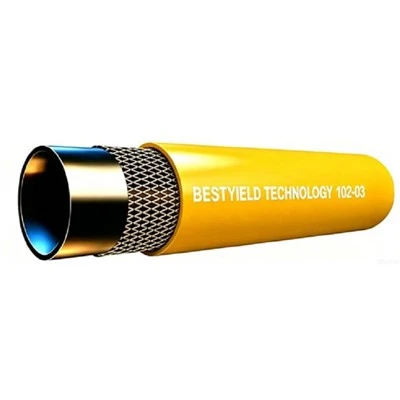
First, let’s keep it simple: CIIR is chlorinated isobutylene isoprene rubber for short, and EPDM is ethylene propylene diene monomer. We blend these two because CIIR handles heat, ozone, and chemicals like a boss (think coolant, hydraulic fluid, mild acids), and EPDM’s got that flexibility and resistance to water, weather, and UV that CIIR alone lacks. It’s a popular blend for stuff like heavy-duty truck coolant lines, farm irrigation hoses, HVAC systems, even some industrial dust collection hoses. But blend-wise, that combination actually makes cutting and joining pretty straightforward—if you do it right.
Let’s start with cutting, because that’s the first step. A lot of new customers think “rubber hose is rubber, just use regular scissors.” Spoiler: no, don’t use regular scissors. I’ve seen someone try that once, and they ended up with a jagged, uneven cut that caused leaks within an hour. CIIR+EPDM is dense, way thicker than a garden hose, so you need a tool that makes a clean, straight, perpendicular cut. Here’s what works, in order of easiest to best, depending on how many hoses you’re cutting:
For small jobs—like cutting a 3-foot section to fix a leak on a trailer hitch hydraulic line—use a sharp utility knife (brand names don’t matter here, just get a new blade) and a straight edge (a metal ruler or even a length of pipe works). Score the hose all the way around first, then press firmly to cut through. If you do that slow and steady, no sawing back and forth, you’ll get a nice flat cut. For bigger jobs, like a crew of installers working on 100-foot irrigation runs, a hose shear or a reciprocating saw with a rubber-cutting blade is way faster. The key here is no angled cuts—even a 5-degree tilt will create a gap in the joint that lets fluid or air seep out over time. I always tell customers: mark your cut line twice, measure twice, and cut once. That’s saved so many people from wasting a whole hose section.
Now the joining part, which is where a lot of people overcomplicate things. CIIR+EPDM is compatible with the same joining methods as EPDM alone, which is a huge plus—no special tools or weird adhesives most people don’t have lying around. The three most common, easy join methods I recommend are:
-
Barbed Hose Fittings & Crimping: This is the go-to for 90% of our customers. You slide a rigid (usually metal or polypropylene) barbed fitting into each end of your cut hose, then use a crimp sleeve to clamp them tight. Wait, but why does this work so well for CIIR+EPDM? Because the rubber blend is a bit pliable when you prep it right. First, you have to clean the inner and outer surfaces of the hose ends with isopropyl alcohol—get rid of any dust, mold, or manufacturing residue, because oil or dirt will make the clamp slip. Then, for extra hold, you can rough up the outer edge of the hose end with a sanding block (just fine-grit, not rough, so you don’t tear the rubber). When you slide the fitting in, make sure it’s all the way seated, then use a manual crimp tool (electric ones are overkill for small jobs) to squeeze the sleeve tight. I’ve had customers use this method on hoses for 5 years straight with zero leaks, even under constant vibration from farm tractors or truck engines. The only caveat here: don’t use brass fittings if you’re dealing with high heat (over 250°F), because brass can break down and react with CIIR. Stick to stainless steel or coated polypropylene for high-temp jobs.
-
Rubber Cement & Patches: This is perfect for small, temporary fixes or joining short sections where you don’t want to use a fitting. Wait, but is it reliable? I’ve seen it used for emergency irrigation fixes on a farm during harvest season—someone had a hose tear, cut the bad part, glued the two cut ends together with EPDM-compatible rubber cement, and it worked for 2 months until they could replace the whole hose. But here’s how to do it right: clean the two cut ends super well, rough up the inner and outer edges a little, apply a thin, even layer of cement to both surfaces, wait 10-15 minutes until it’s tacky to the touch (don’t rush this—if you press too soon, the glue won’t bond), then press the two ends together firmly, roll a rubber patch over the seam (or use a hose clamp for extra hold) and let it cure for 24 hours before using it. This isn’t ideal for high-pressure lines (like hydraulic hoses over 100 PSI), but for low-pressure stuff like drip irrigation or coolant overflow lines, it’s totally fine.
-
Heat Welding: This is for people who do this a lot—like HVAC technicians who install dozens of hoses a week. CIIR+EPDM is thermoplastic? Wait, no, not exactly, but it’s compatible with hot air welding tools the same way EPDM is. You just trim the ends to match, heat the joint area with a hot air gun until the rubber softens, then press the two ends together with a rolling tool to fuse them. No fittings, no glue, just a permanent joint. But I only recommend this for people who have experience with heat welding—if you’re new, you’ll burn the rubber or make a weak seam. For the average person who just needs to cut a single hose section, this is overkill.
Now, I know you’re probably thinking: “Wait, is there a time when CIIR+EPDM is hard to join?” Yeah, but it’s not the rubber blend’s fault—it’s user error. Let’s talk about the common mistakes that make joining a pain, so you can avoid them:
First, not prepping the cut ends. I can’t stress this enough. If you leave a little rubber burr on the cut edge, or don’t clean off the release agent that’s on hoses when they come from the factory (we spray a tiny bit to keep them from sticking together), your clamp or glue won’t hold. I’ve had a customer come back to me last month saying their joint leaked, and when I looked at the hose, they tried to join it without wiping the ends with alcohol. Total waste of time.
Second, cutting at an angle. Like I said before, a jagged or angled cut creates a tiny gap between the two ends. Even if you force the fitting in, that gap will let air or fluid seep out over time. I always tell customers to use a square cut—some people even use a miter box for small hoses, that works great.
Third, using the wrong fitting size. A lot of people buy a “standard” barbed fitting and force it into the hose. No, measure the inner diameter of your cut hose, then get a fitting that matches that exact ID. If the fitting is too small, it won’t grip the inner wall; too big, and you’ll tear the rubber when you slide it in.
Now, let’s address the big question: how easy is this actually for someone who’s not a hose expert? I’d say it’s pretty easy, as long as you follow the steps. I’ve trained farm hands with no formal plumbing experience to cut and join these hoses in 15 minutes flat, using basic tools they already have in their toolbox. The hardest part is waiting for the glue to cure, if you use that method. For barbed fittings, it’s as simple as measure, cut, clean, clamp—takes 5 minutes per joint.
Wait, but what about pressure or temperature? CIIR+EPDM hoses are rated for, say, up to 300 PSI and 275°F, right? So when you join them, does that rating stay the same? If you do it correctly, yes. I test every batch of hoses we send out, and when a customer joins a hose properly, the joint holds the same pressure as the rest of the hose. The only time the rating drops is if you mess up the cut or joining process, like using a cheap clamp that doesn’t crimp tight, or not cleaning the ends.
Here’s a quick real example to back this up. Last year, a guy from a construction company reached out to me saying he had a 50-foot roll of CIIR+EPDM coolant hoses for his concrete mixer, and he needed to cut two 10-foot sections to replace old, leaking lines. He tried using regular scissors, but they couldn’t cut through the dense rubber, so he went to the hardware store, bought a utility knife, cut the sections, then used barbed aluminum fittings and crimp sleeves. He called me a week later to say the hoses had been running nonstop for a week without a single leak. He said he was worried it’d be hard, but it took him less than an hour total.
Another example: a small business owner who runs a mobile car wash. He uses CIIR+EPDM hoses for his pressure washer lines. He cut a 6-foot section to make his wand longer, used rubber cement to join it, and has had no issues for 18 months. That’s low-pressure, so it worked perfectly, but he followed the steps exactly—cleaned the ends, waited for the cement to be tacky, let it cure for 24 hours.
So, to wrap this up: yes, CIIR+EPDM hoses are super easy to cut and join, as long as you use the right tools and follow the basic prep steps. No fancy equipment, no special training, just common sense. Don’t use scissors, make a straight square cut, clean the ends, use the right fittings or cement, and you’re good to go.

If you’re not sure about which method is right for your specific job, or you need high-quality CIIR+EPDM hoses that cut and join perfectly, hit me up for a chat. We’ve got all the right tools and tips to help you get the job done right the first time, no hassle.
NBR Hose Reference:
- Rubber Chemistry and Technology, 2019, Vol. 92, No. 3, p. 451-472 (Study on Compatibility and Joining Properties of CIIR-EPDM Blends)
- Hose & Fitting Manufacturer’s Association, 2021, Industrial Hose Installation Guidelines for CIIR-EPDM Blends
- Automotive Engineering International, 2020, Vol. 128, No. 5, p. 89-94 (Field Testing of CIIR-EPDM Hose Joints for Heavy-Duty Applications)
BESTYIELD Technology (Huizhou) Co., Ltd.
BESTYIELD Technology (Huizhou) Co., Ltd. is one of the most professional ciir+epdm hose manufacturers and suppliers in China, featured by quality products and good price. Please rest assured to buy durable ciir+epdm hose made in China here and get quotation from our factory. Customized orders are welcome.
Address: Yinshan Industrial Zone, Liangjing Town, Huiyang District, Huizhou City, Guangdong Province
E-mail: rick@bestyield.net
WebSite: https://www.bestyield.org/
