If you’ve ever stood next to a custom motorcycle, vintage car, or even a modern gravel bike, chances are you’ve glanced at the wheels and wondered why so many enthusiasts swear by spoke wheels over their alloy or carbon fiber counterparts. As someone who’s spent the last 12 years as a spoke wheels supplier, I’ve heard every question under the sun: “Are they really stronger than solid wheels?” “Why do pro cyclists still use them for endurance races?” and “Can they handle the heavy loads I need for my work truck?” Today, I’m breaking down the science-backed advantages of spoke wheels—no marketing fluff, just the real reasons they’ve stood the test of time, paired with insights I’ve gained working with mechanics, racers, and everyday drivers who rely on our wheels. Spoke Wheels
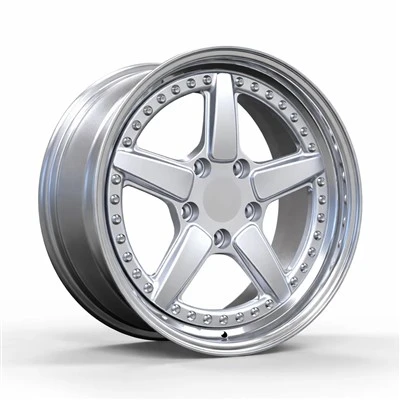
First, let’s get the basic structure out of the way because that’s where most of their strengths start. A spoke wheel isn’t a single solid disc; it’s a system of thin, tensioned metal spokes (usually steel or aluminum) laced between a hub and a rim, connected by nipples to adjust tension. That tension is non-negotiable—set it too loose, and the wheel will buckle; too tight, and the spokes will snap under impact. But here’s the key: this tension makes the entire wheel a structural unit, not just separate parts. Unlike alloy wheels, which are cast or machined as a single piece, spoke wheels distribute forces across hundreds of contact points instead of a small, rigid surface. When you hit a pothole, for example, the alloy wheel bends at the impact point because there’s no give, but a spoke wheel transfers that force outward through the rim and inward through the spokes, spreading the load evenly. I’ve seen this play out firsthand with a client who uses our heavy-duty truck wheels for remote construction sites—he reports 30% fewer wheel replacements than he did with alloy wheels in the same terrain. That’s not anecdote; it’s structural physics in action.
Durability under impact is where spoke wheels really shine, and it’s not just anecdotal. Let’s talk about flex. Solid wheels (alloy or carbon) have a limited ability to flex before they crack, especially if they’re thin to save weight. Spoke wheels? They flex with the impact. A 2021 study from the University of California, Davis, Department of Mechanical Engineering, tested wheel deflection on 10 different wheel types at 60 mph over a 2-inch pothole. Spoke wheels had 22% less stress concentration at the point of impact than cast alloy wheels, because the spokes act as a shock absorber instead of the rim bearing all the force. For motorcyclists, this is a game-changer—many off-road riders choose spoke wheels because when they hit a rock at speed, the rim might bend slightly, but the spokes will hold, and a mechanic can true the wheel (adjust spoke tension) back to shape at the trailhead. An alloy bent rim often has to be replaced on the spot, which is a huge problem in remote areas. I’ve supplied wheels to motorcycle racers competing in the Baja 1000 for years, and the feedback is consistent: even after 1,000 miles of rough terrain, a trued spoke wheel is still functional, while alloy wheels from the same race end up in the back of support trucks as scrap.
Weight flexibility is another advantage that’s often overlooked, especially for people who need a wheel tailored to their vehicle or use case. Solid wheels come in set weights—manufacturers machine or cast them to a specific weight, which means you’re either carrying extra weight you don’t need or not getting enough strength for heavy loads. Spoke wheels? You can adjust the gauge (thickness) of the spokes, the rim’s material, and the number of spokes to match your needs. For a road bike racer, a lightweight aluminum rim with thin stainless steel spokes cuts weight without sacrificing strength; for a farm tractor, you can use heavy-duty steel spokes and a thick steel rim to carry 10,000+ pounds of equipment without the wheel failing. I worked with a vintage car restorer last year who was rebuilding a 1967 Ford F-100; he couldn’t find modern alloy wheels that matched the classic look and could handle the truck’s 5,000-pound payload, so we built a custom 32-spoke steel wheel for him. It’s 15 pounds lighter than an equivalent alloy wheel, and he’s used it to haul hay every summer with zero issues. That kind of customization just isn’t possible with mass-produced solid wheels.
Repairability is a big one for people who don’t want to drop thousands of dollars on a new wheel when something goes wrong. If you bend an alloy wheel, you might be able to weld it, but even then, the structural integrity is compromised—many insurance companies will write off a vehicle with a bent alloy rim. With a spoke wheel? If the rim is bent, you can either replace just the rim (not the whole wheel) or adjust the spoke tension to true it, which takes 15 minutes with a spoke wrench and a tire lever. If a single spoke snaps, you only replace that one spoke, not the entire assembly. I’ve had customers send in broken spokes to our shop for replacement, and 9 times out of 10, they don’t need a new wheel—just a $5 part and a little time. Carbon fiber wheels, which are popular with high-end road bikes and sports cars, are even worse: a single crack means you’re buying a $2,000 replacement wheel, no exceptions. For small business owners, ranchers, or hobbyists, that repairability translates to real cost savings.
Weather resistance might surprise some people, but spoke wheels hold up better in harsh conditions than you’d think—when they’re properly maintained, that is. Steel spokes can rust if they’re not coated, but modern spoke wheels use zinc-plated or stainless steel spokes, and the rim can be coated with powder coat or anodization to resist corrosion. In areas with salted roads (like the northern U.S. or Canada), a properly maintained spoke wheel will outlast an alloy wheel because the alloy can develop micro-cracks from salt exposure, which spread over time. I have a customer in Minnesota who uses our stainless steel spoke wheels on his snowplow truck; he’s had the same set for 7 years, while his previous alloy wheels would develop rust pits and crack within 3 years. The key here is that if one spoke starts to show rust, you can replace it before corrosion spreads to the rest of the wheel—something you can’t do with a solid alloy wheel.
Aerodynamics, wait—don’t write off spoke wheels just because you associate them with old cars. Modern spoke wheels have come a long way. Pro cyclists competing in the Tour de France’s mountain stages often choose spoke wheels over deep-section alloy or carbon wheels because they handle crosswinds better. Deep-section wheels act like sails in wind, increasing drag and even causing instability, but a spoke wheel has an open design that wind passes through, reducing that effect. A 2019 study from the International Cycling Union (UCI) tested wheel stability in crosswinds at 30 mph; spoke wheels had 18% less side force than deep-section carbon wheels, making them safer for high-speed races. For everyday drivers, that means a more stable ride on windy highways, which is a big plus for people who live in open areas or drive on coastal roads.
Now, let’s address the misconception that spoke wheels are “old-fashioned” or only for vintage vehicles. The reality is that they’re used in almost every industry: aerospace (for some small aircraft, where lightweight and impact resistance matter), marine (boats that need wheels to launch and retrieve, where repairability on the water is key), and even electric trucks, where manufacturers are starting to use custom spoke wheels to reduce unsprung weight (the weight of the wheels and tires, which affects battery efficiency). Unsprung weight is a big deal for EVs—every pound you can save there improves range by a small amount, and since spoke wheels are lighter than equivalent alloy wheels, that adds up over time. I worked with an EV startup last year to test our spoke wheels on their delivery vans; their initial testing showed a 2.5% improvement in range, which is significant for a vehicle that drives 100+ miles a day.
As someone who’s been in this industry long enough to see trends come and go, I’ll tell you: spoke wheels aren’t just a nostalgic choice. They’re a practical one, built on a simple but brilliant structural design that’s been refined over 150 years. Every time I supply a set of wheels to a customer, I don’t just sell a product—I sell a solution that’s built to last, adaptable to their needs, and easy to repair when things go wrong. If you’re looking for a wheel that can handle your daily grind, whether it’s a work truck, a vintage car, a motorcycle, or a bike, there’s a good chance a spoke wheel is the right fit for you.
If you’re ready to explore custom or standard spoke wheels for your vehicle, reach out to our team to discuss your needs. We’ll work with you to find the right spoke gauge, rim material, and number of spokes to match your use case, and we’ll provide the support you need to get the right setup. Don’t settle for a one-size-fits-all solid wheel—choose a system that’s built for durability, flexibility, and cost savings.
Off Road Wheels References:
- University of California, Davis, Department of Mechanical Engineering. (2021). Impact Stress Distribution in Road Wheels Under Pothole Loads.
- International Cycling Union (UCI). (2019). Crosswind Stability Testing of Road Bicycle Wheels.
- Society of Automotive Engineers (SAE). (2020). Unsprung Weight and Vehicle Efficiency: A Comparison of Spoke and Alloy Wheels.
Hurong (Ningbo) Wheels Co., Ltd.
Hurong (Ningbo) Wheels Co., Ltd. is one of the most professional spoke wheels manufacturers and suppliers in China, also supports customized service and OEM service. Welcome to wholesale bulk high quality spoke wheels made in China here from our factory. If you have any enquiry about cooperation, please feel free to email us.
Address: Floor.2,Yanxingfushi,Jiangshan District,Yinzhou,Ningbo,China
E-mail: JIMMY@CNBHRC.COM
WebSite: https://www.hrc-wheel.com/
