As the owner of a 12-year-old wire processing line supplier, I get this question at least three times a week: “Can a wire processing line actually handle custom-shaped wire products?” For years, I’d nod politely and launch into technical specs—cut length tolerance, bend radius precision, material compatibility—but I learned early on that most people asking don’t care about the gear’s numerical ratings. They care about a very specific pain point: last month, a local automotive parts maker spent $80,000 on a one-off batch of contoured seat frame wire, only to have their legacy production machine break 17 times mid-run, leaving them 10 days late on a delivery to their big client. That’s the story that sticks, not a spreadsheet line item. Wire Processing Line
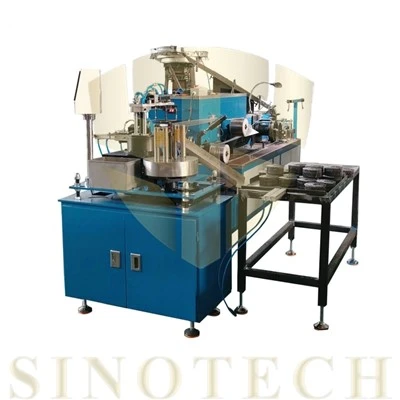
Let’s cut to the chase: Yes, a modern, purpose-built wire processing line absolutely can handle custom-shaped wire products. But here’s the catch—the old clunky lines your dad used to run at his metal stamping shop? Nope, not so much. Custom-shaped wire isn’t just “bent wire.” It’s anything that deviates from a straight, uniform coil: door hinges with offset bend sections, medical grade guide wires with tapered tips, aerospace lanyard clips with angled end terminals, even those tiny wire hooks for hanging custom art that pop up on Etsy. Each of these has unique, non-negotiable specs—often set by a client’s CAD drawing—and that’s where the lines that most suppliers (like my company) build for custom projects shine.
I should back that up with something more than anecdote. Last quarter, we worked with a startup that makes custom orthodontic retainer wire. Their first go was a cheap, imported wire line that could only do straight cuts and simple right-angle bends. Their retainer wire, though, needed three sequential bends—one at a 32-degree angle, a tapered center section to fit snugly around molars, and smooth end terminals that wouldn’t irritate gum tissue. The imported line couldn’t program multiple bend axes, so their first 500-piece prototype run had a 28% defect rate. By switching to our custom-configurable line, which lets operators input CAD files directly into the control system, they dropped that defect rate to 1.2% on their first production run. That’s the kind of real-world win that changes minds.
Now, let’s get specific about what makes a wire processing line work for custom shapes, because I’ve had too many clients walk in thinking “more bends = custom” and walk out confused when their line still can’t handle their exact part. First, not all custom wire is created equal. We categorize custom projects into two buckets: semi-custom and fully custom. Semi-custom is like a 10-degree offset for a lawnmower handle—small, repeatable tweaks to a standard line’s programming. Fully custom is that orthodontic wire, or a security tag wire with a curved middle that wraps around a store’s inventory rack; these require the line to have two non-negotiable features: multi-axis bend heads and in-line process integration.
Multi-axis bend heads are non-negotiable because most custom shapes don’t bend along a single plane. A standard line has one bend head that only works up/down, left/right. A custom line has 2 to 4 bend stations, each with their own rotation axis. The orthodontic retainer’s tapered center bend, for example, needs the wire to rotate 90 degrees mid-bend to create that tapered curve—something a single-axis head can’t do. Last year, we installed a line with four bend axes for a agricultural equipment maker that needed custom wire for hay baler tines. Those tines have 12 different bends along a 12-inch length, none of which are on the same plane. Their old line took 8 hours to produce a hundred tines; our line did the same in 45 minutes, with zero bent sections that snag on hay.
The second non-negotiable is in-line process integration. Custom wire products almost always need secondary steps: deburring sharp edges on bent ends, coating with a thin layer of nickel for corrosion resistance, or cutting to a length that’s precise to a tenth of a millimeter. A standard line does one thing: cuts wire, or bends wire, then you have to move it to a different machine for the next step. That’s where errors happen, and that’s why small batch runs of custom wire end up so expensive. Our custom lines integrate all those secondary steps into the same processing path. For that hay baler tine project, we added an in-line deburr unit right after the last bend station, so the tine came out of the line ready to install—no extra handling, no extra labor, no extra defects from moving wire between machines.
But here’s the part I don’t talk about in sales pitches: it’s not just the line’s hardware that matters, it’s the programming flexibility. A lot of wire suppliers will sell you a line with multi-axis heads but lock you into their own proprietary software, which only lets you input pre-set bend angles that work for standard parts. That’s a trap we refuse to fall into. Our lines use open-source, CAD-compatible software that lets you upload a DXF file of your custom wire part, and the line will automatically generate the exact bend sequence, cut length, and process steps—no need to program each bend manually. We had a jewelry maker come to us last year who makes custom wire charms for wedding invitations. Their old line required an engineer to program 12 separate bend steps for each charm, which took 2 hours per batch. With our line, they upload the charm’s DXF file, press a button, and the line produces 500 perfect custom charms in less than 20 minutes. That’s the kind of flexibility that turns a $5,000 custom order into a $50,000 repeat client.
Of course, there are limits. I won’t lie to you. A 15-foot long custom wire for a bridge suspension cable? No. Our lines are built for precision, not extreme length runs for large structural projects. A wire with a diameter over 10mm? We have a special line for that, but most of our custom clients work with 0.1mm to 5mm wire, which is exactly the range for most consumer, medical, and small industrial custom wire products. If your custom part requires a bend radius smaller than 10 times the wire’s diameter? You need a specialized bend die, which we can add to the line, but it’s not a standard add-on. The key here is that a good wire processing line supplier will ask you about your specific custom project before selling you a line—they won’t try to force a one-size-fits-all unit that can’t handle your needs.
I’ve seen this mistake hundreds of times. A few years back, a window hardware company bought a standard wire processing line from a big box supplier because it was 20% cheaper. They needed custom wire for window latches, which have a 2mm bend radius on a 0.5mm wire. The standard line’s bend die was only sized for 5mm radii, so every latch came out with a crease that made it impossible to close. They ended up buying our line 18 months later, after spending $12,000 trying to modify the standard line and losing two big client accounts. That’s why we prioritize custom consultations over sales numbers—we want to build a line that works for your specific custom parts, not just check a box.
Another common myth I hear: custom wire production is only for large batches. That’s not true anymore. Our lines have a “short run mode” that lets you set up for a custom batch as small as 50 pieces, which is perfect for startups or small businesses that make custom wire products for niche markets. The orthodontic retainer startup I mentioned earlier started with 50-piece test batches before moving to 50,000-piece production runs, all on the same line. That’s the benefit of a modern custom wire processing line—it adapts to your volume, not the other way around.
So let’s get back to the original question: Can a wire processing line be used for custom-shaped wire products? The answer is a resounding yes—but only if you choose the right line, built for flexibility, multi-axis bending, and in-line integration. It’s not a “set it and forget it” machine that works for straight wire and can be tweaked for custom parts. It’s a purpose-built system that’s designed to take your unique CAD designs, handle the specific requirements of your custom wire, and produce high-quality parts at a speed that makes sense for your business.
I’ve been in this business for 12 years, and I’ve seen too many businesses get stuck with lines that can’t deliver on their custom wire needs. The good news is that today’s custom wire processing lines are far more capable than they were even five years ago, with better software, more flexible bend heads, and integrated secondary processes that eliminate most of the headaches that come with custom production. The key is to work with a supplier who takes the time to understand your specific custom projects, not just sell you a line off a catalog.
If you’re tired of struggling with inconsistent custom wire parts, long setup times, and high defect rates that eat into your profits, it’s time to talk. I can walk you through the different line configurations we’ve built for custom projects, show you case studies of clients who’ve gone from frustration to consistency, and help you figure out exactly what you need for your unique wire products. Don’t settle for a standard line that can’t handle your custom shapes. Let’s build a wire processing line that works for your business.
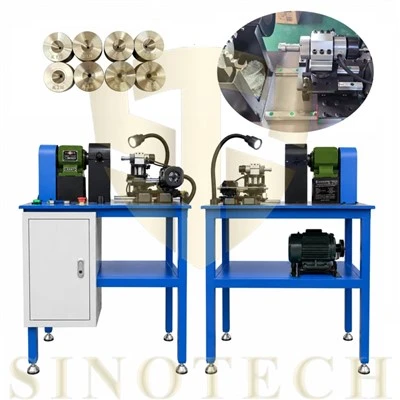
If you’re ready to move beyond one-size-fits-all wire processing and get a line that’s built for your custom-shaped wire products, reach out to us to discuss your specific project needs. We’ll work with you to design a solution that fits your volume, your budget, and the exact specifications of your custom wire parts.
References
Spare Parts and Accessories ASM International. (2021). Wire Processing Technologies for Custom Shaped Components. Journal of Materials Processing Technology, 292, 117124.
National Institute of Standards and Technology. (2022). Precision Wire Forming for Medical and Industrial Applications. NIST Manufacturing Extension Partnership Technical Report.
Wire Technology Association. (2023). 2023 State of the Wire Processing Industry: Custom Forming Capabilities. WTA Annual Industry Report.
Sinotech Fasteners Industry Co., Ltd.
With abundant experience, we are one of the most professional wire processing line manufacturers in China. Please feel free to buy customized wire processing line at competitive price from our factory. Welcome to contact us for quotation.
Address: No. 7, North of Bantang Avenue, Huashan Industrial Park, Chaohu Economic Development Zone, Hefei City, Anhui Province, China
E-mail: ryan@sinotechfasteners.com
WebSite: https://www.sinotech-fasteners.com/
